
Sustainable Embroidery in 2026: What Actually Works — and What Doesn’t
Sustainable Embroidery in 2026: What Actually Works — and What Doesn’t
Sustainability in embroidery is no longer a niche selling point. In 2026, it is a buying decision.
Brands are being asked about it by customers and corporate clients. Shops are being asked about it by brands. And vague answers — an “eco-friendly” label, a green leaf on a product page — no longer work.
This guide is based on what we test on real machines at Stitch To Art. We have delivered more than 2,400 files since 2018, and every file is machine-tested before it goes to a client.
Why Sustainability Is Now a Baseline
Printful’s 2026 trends report lists sustainability as a key macro-shift. Organic fabrics, recycled polyester and water-saving production are now expected, not exceptional.
Buyers have also got more specific. They ask for the fibre by name: recycled polyester, organic cotton, or rayon made from regenerated plant cellulose.
Name the material instead: “GRS-certified recycled polyester thread on an organic cotton polo” beats calling a whole garment “100% sustainable” when only the thread is recycled.
Regulation is pushing the same way. In Europe, REACH compliance is driving makers towards low-impact dyes and biodegradable stabilisers. Corporate buyers increasingly ask for certifications they can file: GRS for recycled content, GOTS for organic textiles, and OEKO-TEX for the finished product.
The Thread Choices That Matter in 2026
Recycled Polyester (rPET): The Workhorse
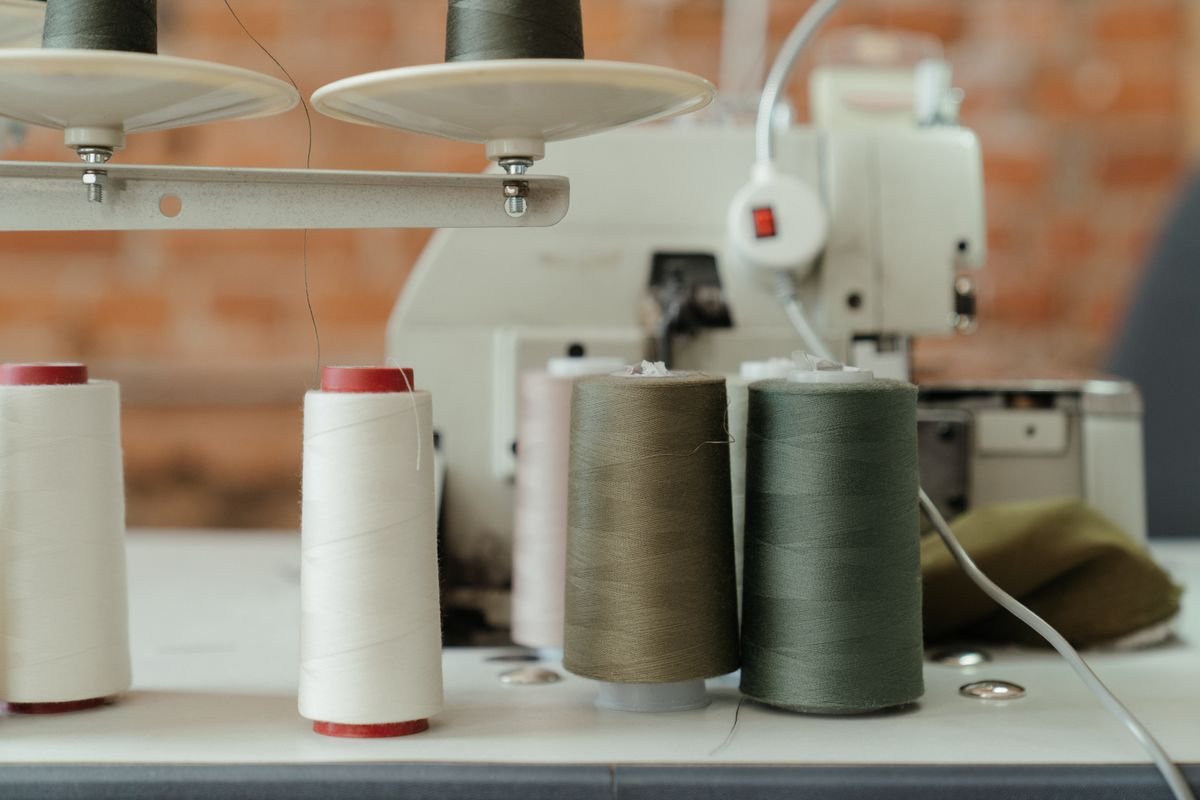
Recycled polyester thread, or rPET, is made from post-consumer PET — most often plastic bottles — or industrial plastic waste. The plastic is cleaned, melted and spun into fibre, then made into thread.
In production, it behaves almost identically to virgin polyester. That is why it is the most practical sustainable thread for workwear, caps, polos and team apparel. It is strong, colourfast, and holds up to industrial washing.
Examples include Madeira Polyneon Green and AMANN Isacord Recycled. Ask for GRS or OEKO-TEX certification for that exact thread.
Be precise: rPET does not make the thread biodegradable, or the whole garment recycled. If only the logo thread is recycled, say that. It may need a small tension adjustment — test sew first.
Organic Cotton: Soft, But Know Its Limits
Organic cotton thread is grown without synthetic pesticides or fertilisers, and certified under standards such as GOTS. Brands like COTTY BIO offer GOTS-certified organic cotton thread.
It feels softer and more natural than polyester, and it is biodegradable. For skin-contact garments, babywear, or soft goods that are not industrially laundered, that can be the right choice.
It also has limits. Cotton is weaker, can snap in dense patterns, fade after washing, and pucker as it absorbs water and shrinks. It is unsuitable for industrial laundering, where cycles can reach 60–70°C. Digitize for it — lower density, fewer tight satin columns — and test sew first.
Rayon and Viscose: A Middle Option
Biodegradable rayon and viscose threads, including Sulky viscose and Madeira Ecoverde, sit between cotton and polyester. They suit fashion work where a silk-like finish matters, but are less forgiving on heavy workwear. Test them on the real fabric, after a wash.
The Fabric Matters More Than the Thread
A recycled thread on a virgin polyester garment is still a step, but a small one. The garment fabric is usually the largest part of the product’s footprint, and the part customers ask about first.
In 2026, the practical combinations are organic cotton blanks for tees and polos, recycled polyester blends for sport polos, and 50/50 recycled-organic blends.
Ask your blank supplier for the same proof you ask for thread: GOTS or OCS for organic cotton, GRS for recycled polyester. If a supplier cannot name the certification for a specific product, treat the claim as unproven.
Fabric also changes digitizing. Organic cotton knits can be softer and stretchier; recycled polyester can be slicker. Both need a sew-out on the actual blank.
Digitizing for Lower Waste
Sustainability is not only about materials. It is also about how many samples and re-runs you waste getting to a clean stitch-out.
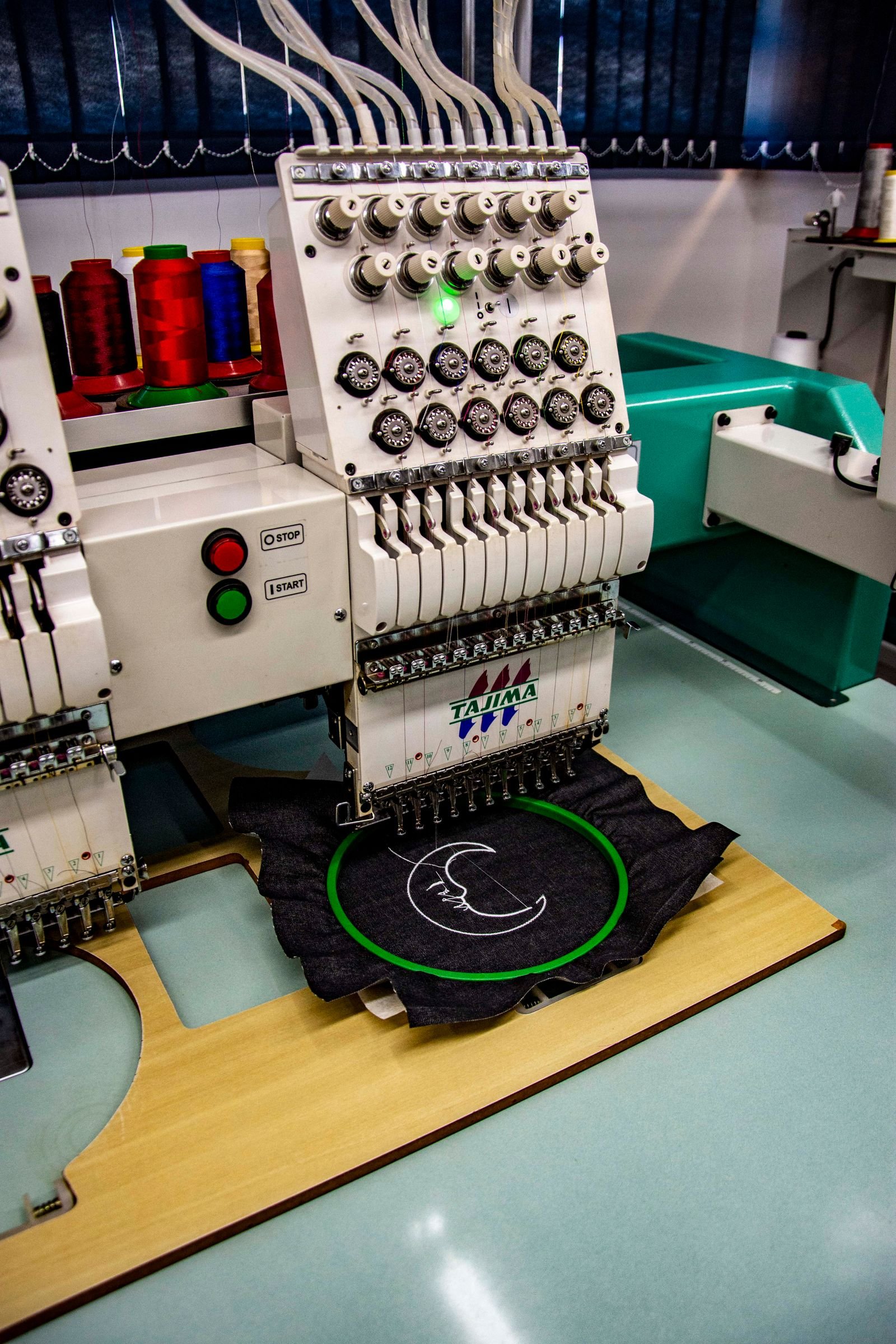
A file digitized for the specific fabric, thread and garment reduces thread breaks, puckering and rejected garments. A dense fill that works on a twill cap will pucker on a lightweight organic cotton tee.
Reduce stitch count where it does not add quality. Unnecessary fills waste thread and stiffen the garment.
Test once, properly. One sew-out on the actual garment, checked after washing, saves more material than three rushed samples.
AI-assisted digitizing can help with the first pass, but it still needs human review. Use it as a starting point, then test it like any other file.
Stabilisers, Backing and Patches: The Hidden Waste
Stabiliser, backing and patch materials are where a lot of waste hides.
For most apparel, the choice is cut-away, tear-away or water-soluble stabiliser. Cut-away gives the most support for knits, but leaves material behind. Tear-away is cleaner, but not right for unstable fabrics. Water-soluble dissolves away, but uses water to remove.
There is no single “eco” stabiliser. The sustainable choice is the one that supports the design with the least material, and does not cause the garment to be rejected.
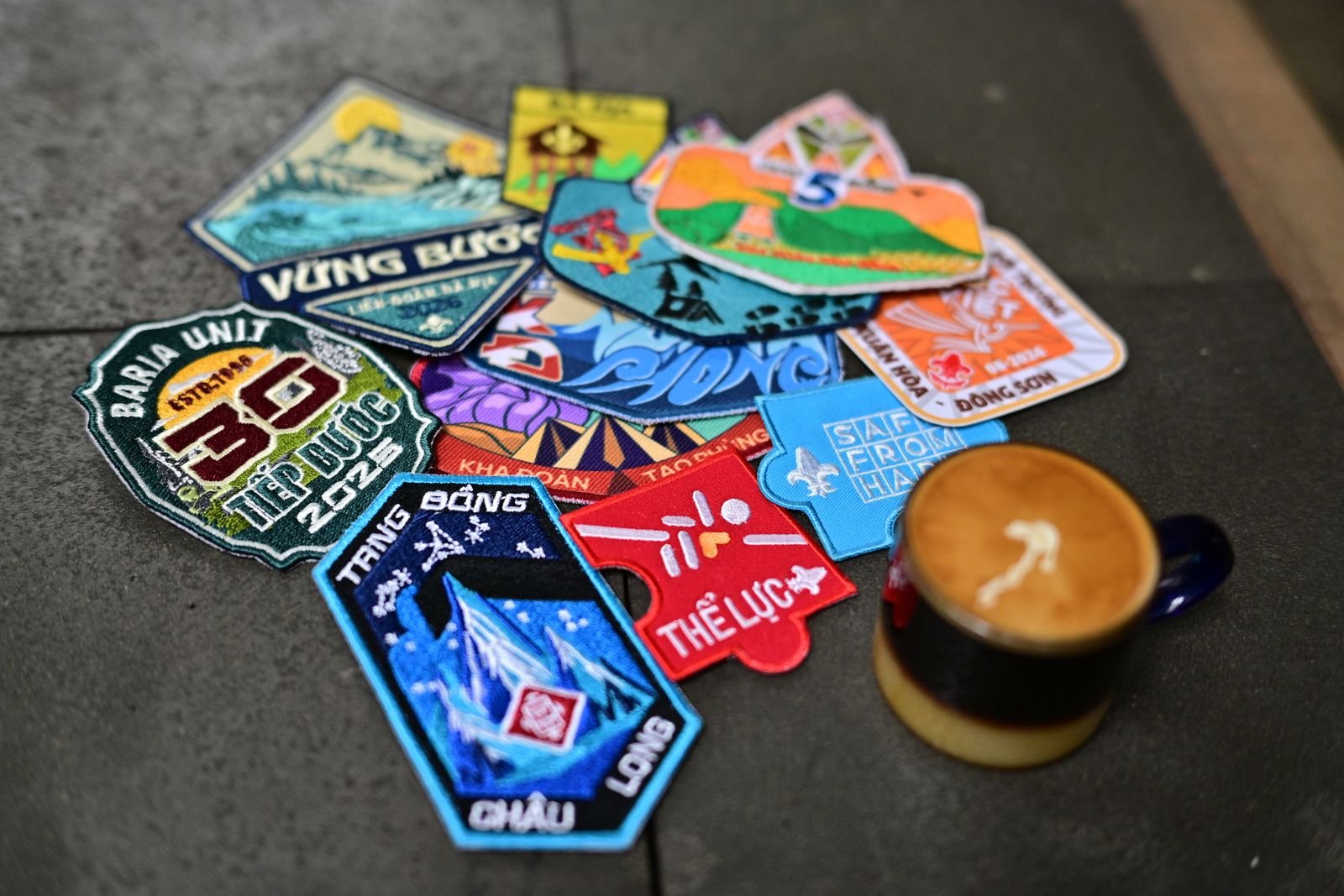
For patches, the strongest combination at scale is rPET thread on recycled twill backing. For outdoor gear, recycled-content PVC may still be more durable. A patch that peels after a month is worse than a durable patch that lasts for years.
Durability Is the Most Sustainable Choice
The most sustainable embroidered garment is the one that lasts. A uniform that lasts five years needs fewer replacement orders than one that lasts two years, regardless of thread type. A cap logo that survives 50 washes without fading does more for waste reduction than a recycled thread on a garment that falls apart.
Embroidery already has an advantage: unlike print, it uses no inks or water in the decoration itself. That only holds if the file is digitised well and tested.
Factor in replacement cost, not just unit cost. “Stitched to last the life of the garment” is provable with wash tests. “This garment saves the planet” is not.
Visible mending is part of the same idea: embroidery to repair a defect or turn unsold stock into a limited edition.
How to Brief a Supplier Without Greenwashing
Greenwashing is not just a reputational risk — in many markets, it is a legal risk. Be specific, and only claim what you can document.
- Name the fibre and certification. “GRS-certified recycled polyester thread” is a claim. “Eco thread” is not.
- Say what is recycled, and what is not. If only the thread is recycled, say that.
- Ask for a stitched sample on your actual garment. A sample proves the thread, fabric and digitizing work together.
- Ask about wash testing. How many washes has this combination been tested for?
- Keep language restrained. “Made with recycled polyester thread” is stronger than “planet-friendly” because it is true and checkable.
Start small. Pick your best-selling polo, tee or cap, switch one element — thread, blank or stabiliser — and test it properly. Then switch the next.
Frequently Asked Questions
Is recycled polyester embroidery thread as good as normal polyester thread? For most apparel work, yes. GRS-certified rPET matches virgin polyester for strength and colourfastness. It is still polyester, so it is not biodegradable, and it may need a small tension adjustment.
Is organic cotton thread better than recycled polyester? It depends on the use. Organic cotton is softer, biodegradable and better for skin-contact garments that are lightly washed. Recycled polyester is stronger, more colourfast and better for workwear and garments washed often. Choose by use case, not by label.
What is the most sustainable embroidery choice I can make? Durability. A well-digitized, machine-tested design that lasts the life of the garment reduces replacements more than any single material swap. After that, choose a named, certified thread and fabric, and use the least stabiliser that supports the design cleanly.
Do I need GOTS or GRS certification to sell sustainable embroidery? You do not need the certification yourself, but you need to prove the claim you make. If you say “GOTS-certified organic cotton,” show the certification for that product.
Get a Free Quote
Ready to make your next run more sustainable — without sacrificing stitch quality? Send us your logo and tell us the garment, thread and fabric you have in mind. We will digitize it for that combination, machine-test it, and send you a free quote in under two hours.
Get your free quote from Stitch To Art: https://stitchtoart.com/
The newsletter
Stay Updated With
Industry Insights.
Get the latest embroidery tips, vector design techniques, production advice, and business resources delivered directly to your inbox. One useful email — no spam, ever.
Unsubscribe anytime. We respect your inbox and your data.